


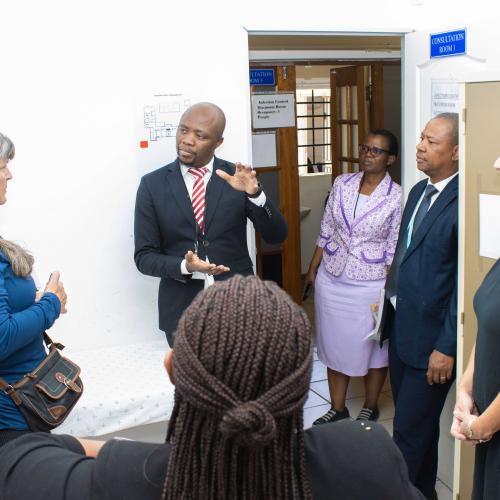
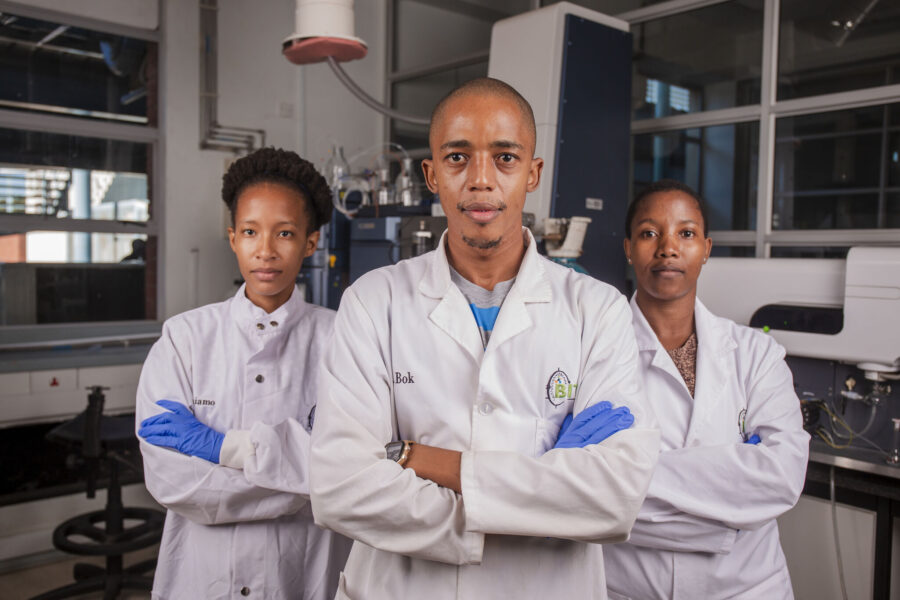


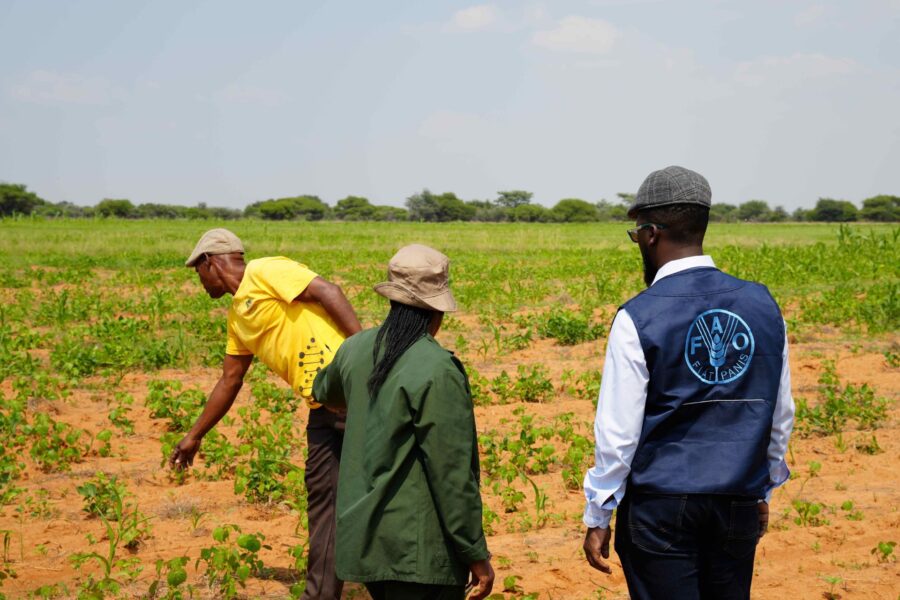
Some of the most important scientific infrastructure in Botswana does not look like a telescope or satellite. It looks like a clinical research site, a laboratory, a trained study team, a data system and a long-term relationship with communities.
The Botswana Harvard Health Partnership, established in 1996 through collaboration between Botswana's Ministry of Health and Harvard, grew around the challenge of HIV/AIDS. Today its research portfolio extends across clinical trials, laboratory science, implementation research and other major public-health questions.
The short version
A research institution becomes powerful when it can repeatedly turn health questions into ethical studies, reliable data, trained people and evidence that changes practice. BHP's long-term importance lies in that research capacity, not in any single study.
Research capacity is built before a crisis
When a new health threat appears, the visible work may seem to begin with a test or a study. In reality, effective research depends on systems built years earlier: laboratories, trained clinicians, ethics processes, data management, community engagement, quality assurance and international collaboration.
BHP says it has more than 300 scientists, students and staff and works with government, universities, the private sector and civil society. Its research has contributed to HIV testing, treatment and prevention knowledge while also expanding into cancer and other health challenges.
Clinical trials are organised uncertainty
A clinical trial is a structured way of asking whether an intervention is safe and effective while reducing the risk that expectation, coincidence or bias is mistaken for evidence. That structure requires protocols, participant protection, monitoring, statistical planning and careful follow-up.
Dr Gaerolwe Masheto, appointed BHP Executive Director in August 2025, has worked in its Clinical Trials Unit since 2011 and has held leadership roles across major international HIV research networks. His career illustrates how an institution's research capacity is also a human-capital project.
The portfolio has widened
BHP's current and recent work extends beyond its original HIV focus. Its public information describes research in cancer, chronic conditions, pathogen genomics and other health areas alongside continuing HIV and TB studies.
That expansion is scientifically useful because health problems do not remain in institutional boxes. People living with HIV also experience cancer, cardiovascular disease, mental-health challenges and other conditions. Strong research systems can adapt to new questions without rebuilding from zero each time.
What a treatment-partner study asks
The Mopati study provides a useful example of implementation-oriented research. Its intervention was designed around treatment partners—people who support patients in adhering to antiretroviral treatment. The project involved stakeholder input and assessed whether a structured treatment-partner approach could be feasible and acceptable in Botswana healthcare settings.
This is different from discovering a new molecule. It asks how care can work better in real life. Public-health research often lives in this space between a proven treatment and the practical conditions required for people to benefit from it.
Why local research changes the quality of evidence
Health evidence generated elsewhere is valuable, but local research can reveal differences in disease patterns, health systems, behaviour, genetics, access and implementation. Botswana-based studies make it possible to test questions under the conditions in which policy and clinical decisions will actually be made.
The result is not 'Botswana science' isolated from global science. It is Botswana contributing evidence to a global conversation while retaining the ability to investigate its own priorities.
What happens next
The most valuable health-research institutions are not defined only by laboratories or publication counts. They are defined by the ability to ask important questions repeatedly, protect participants, produce credible evidence, train new researchers and convert findings into better practice.
Botswana's public-health research capacity was built through decades of difficult work. Its next test is whether that capacity can keep broadening to the country's changing health priorities while maintaining the scientific standards that made it useful in the first place.
Sources & further reading
- Botswana Harvard Health Partnership — Who We AreInstitution history, mission, staffing and impact.
- BHP — Appointment of Dr Gaerolwe R. Masheto as Executive DirectorLeadership and clinical-trials background.
- BHP Annual Report — Mopati StudyTreatment-partner intervention summary.